
Moving home or relocating a business can be exciting, but it also comes with challenges—especially when it comes to protecting valuable furniture. Whether you own antique pieces, designer furniture, family heirlooms, or expensive office furnishings, ensuring they arrive at their destination in excellent condition requires careful planning and preparation.
Furniture can be damaged during a move due to improper packing, rough handling, inadequate transportation, or simple accidents. Fortunately, by following a few professional moving practices, you can significantly reduce the risk of scratches, dents, cracks, and other costly damage.
Assess Your Furniture Before Moving
Before packing begins, take time to inspect every piece of furniture that will be moved. Identify any existing damage and make note of delicate areas that require extra protection.
Pay particular attention to:
- Glass surfaces
- Wooden finishes
- Upholstered furniture
- Antique pieces
- Marble tops
- Mirrors and decorative elements
Taking photographs before the move can also provide a useful record of the furniture’s condition and assist with insurance claims if needed.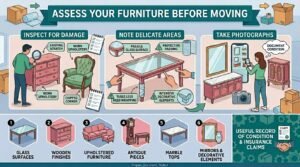
Clean Furniture Before Packing
Cleaning furniture before moving may seem unnecessary, but it plays an important role in protecting surfaces.
Dust, dirt, and debris can cause scratches during transportation if trapped beneath protective coverings. Wipe down furniture thoroughly and allow it to dry completely before wrapping.
For wooden furniture, consider using a suitable furniture polish to provide an additional layer of protection.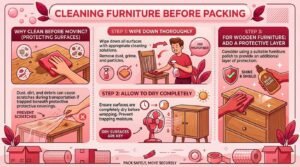
Disassemble Large Furniture
Large furniture pieces are often easier and safer to move when partially dismantled.
Items that can usually be disassembled include:
- Bed frames
- Dining tables
- Office desks
- Shelving units
- Wardrobes
Removing detachable components reduces weight and makes it easier to navigate narrow hallways, doorways, and staircases.
Store screws, bolts, and fittings in clearly labelled bags and keep them attached to the relevant furniture item whenever possible.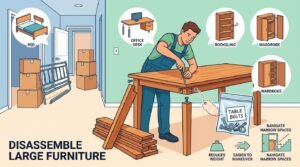
Use High-Quality Packing Materials
One of the most effective ways to protect valuable furniture is by using professional-grade packing materials.
Recommended materials include:
- Furniture blankets
- Bubble wrap
- Stretch wrap
- Foam padding
- Corner protectors
- Packing paper
Avoid using old sheets or thin blankets alone, as they may not provide sufficient protection against impacts and friction.
Quality packing materials help absorb shocks and prevent scratches during loading, transportation, and unloading.
Protect Wooden Furniture
Wooden furniture is particularly vulnerable to scratches, dents, and moisture damage.
To protect wooden items:
- Remove loose parts where possible.
- Wrap surfaces with moving blankets.
- Secure coverings with stretch wrap.
- Avoid placing adhesive tape directly on wood.
Special care should be taken with antique or polished furniture, as delicate finishes can be easily damaged during transport.
Safeguard Upholstered Furniture
Sofas, armchairs, and upholstered beds require protection from dirt, moisture, and tears.
Use furniture covers or plastic wrap designed specifically for moving. Ensure upholstery remains dry throughout the relocation process.
Avoid placing heavy objects on top of upholstered items, as this can permanently damage cushions and fabric.
Protect Glass Components
Glass furniture and decorative elements require extra caution.
Examples include:
- Glass tables
- Cabinet doors
- Mirrors
- Display units
Remove glass components whenever possible and wrap them individually using bubble wrap and protective padding.
Clearly label all boxes and packages containing glass as “Fragile” to encourage careful handling.
Use Proper Lifting Techniques
Even the best packing materials cannot prevent damage caused by improper lifting.
When moving heavy furniture:
- Lift with your legs, not your back.
- Keep items close to your body.
- Avoid dragging furniture across floors.
- Use moving straps or dollies when appropriate.
Improper handling not only risks furniture damage but can also lead to serious injuries.
Protect Floors and Walls
Furniture can easily damage surrounding property during a move.
To protect your home:
- Use furniture sliders.
- Cover floors with protective materials.
- Pad door frames and corners.
- Keep pathways clear.
Taking these precautions helps prevent accidental impacts while manoeuvring large furniture pieces.
Load the Moving Vehicle Carefully
Proper loading is crucial for furniture protection.
Heavier items should be loaded first and positioned securely against the vehicle walls. Lighter and more delicate pieces should be placed on top or in protected areas.
Furniture should never be allowed to shift during transport. Use straps and securing systems to keep items stable throughout the journey.
Professional removal companies typically use specialised equipment to prevent movement and minimise the risk of damage.
Consider Professional Furniture Movers
Valuable furniture often requires specialist handling. Professional removal companies have the experience, equipment, and training needed to transport expensive furniture safely.
Benefits of hiring professionals include:
- Expert packing techniques
- Specialist moving equipment
- Secure transportation
- Insurance coverage
- Reduced risk of damage
For antiques, luxury furniture, or particularly heavy items, professional movers can provide valuable peace of mind.
Inspect Furniture After Delivery
Once your furniture arrives at its destination, inspect each item carefully before removing protective coverings.
Check for:
- Scratches
- Dents
- Loose fittings
- Upholstery damage
- Glass cracks
Addressing any issues immediately allows faster resolution and simplifies insurance claims if necessary.
FAQs
How can I protect wooden furniture during a move?
Wrap wooden furniture with moving blankets and secure them using stretch wrap. Avoid placing tape directly on wooden surfaces, as it may damage the finish.
Should furniture be disassembled before moving?
Yes. Disassembling furniture such as beds, tables, wardrobes, and desks makes them easier to transport and reduces the risk of damage.
What is the best material for protecting furniture during a move?
Furniture blankets, bubble wrap, foam padding, and stretch wrap are among the best materials for protecting furniture from scratches, impacts, and dust.
How do I move glass furniture safely?
Remove glass components if possible and wrap them individually with bubble wrap and protective padding. Clearly label them as fragile during transportation.
Is professional furniture moving worth it?
For valuable, antique, heavy, or delicate furniture, professional movers can provide safer handling, specialist equipment, and insurance protection.
How do I prevent furniture from getting scratched?
Use furniture blankets, protective covers, corner guards, and proper loading techniques. Avoid dragging furniture across floors and ensure items are secured during transport.
Should I insure valuable furniture during a move?
Yes. Insurance provides financial protection in the unlikely event of accidental damage or loss during the relocation process.
How early should I start preparing furniture for a move?
It is best to begin preparations at least one to two weeks before moving day to allow enough time for cleaning, disassembly, packing, and organisation.