
Moving heavy furniture is often one of the most challenging parts of any house or office relocation. Large sofas, wardrobes, dining tables, beds, and office desks can be difficult to handle without proper planning and techniques. Attempting to move heavy furniture incorrectly can result in injuries, property damage, or damage to the furniture itself. Fortunately, by following a few essential safety practices, you can make the moving process much safer and more efficient.
Plan Before You Lift
Before moving any heavy item, take time to assess the situation. Measure doorways, hallways, staircases, and entrances to ensure the furniture can pass through without difficulty. Planning the route in advance helps prevent unexpected obstacles and reduces the risk of accidents.
Remove rugs, decorations, cables, and other objects that could create tripping hazards. Clear pathways provide enough space for safe movement and allow movers to focus on handling the furniture rather than avoiding obstacles.
A few minutes of preparation can save considerable time and effort during the move.
Use the Right Equipment
Moving heavy furniture without proper equipment can be dangerous. Professional movers rely on specialised tools designed to reduce strain and improve safety.
Useful moving equipment includes:
- Furniture dollies
- Hand trucks
- Moving straps
- Furniture sliders
- Protective blankets
- Lifting harnesses
Furniture sliders are particularly useful when moving large items across hardwood, laminate, or carpeted floors. They reduce friction and minimise the risk of scratching flooring surfaces.
Using the right tools allows heavy items to be moved more efficiently while reducing physical strain.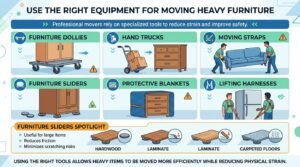
Empty Furniture Before Moving
Many pieces of furniture become significantly heavier because they contain stored items. Before moving wardrobes, filing cabinets, desks, or drawers, remove all contents.
Take out:
- Clothing
- Books
- Office supplies
- Electronics
- Decorations
Removing contents makes furniture lighter and easier to handle. It also prevents internal damage caused by shifting items during transportation.
Drawers and removable shelves should be taken out separately whenever possible.
Disassemble Large Furniture
Large furniture often becomes easier and safer to move when partially dismantled. Removing detachable components can reduce weight and improve manoeuvrability.
Items commonly disassembled include:
- Bed frames
- Dining tables
- Office desks
- Shelving units
- Wardrobes
Keep screws, bolts, and fittings in clearly labelled bags to simplify reassembly at the destination.
Disassembly not only makes lifting easier but also reduces the risk of damage when navigating tight spaces.
Lift Correctly
Poor lifting technique is one of the most common causes of moving-related injuries. Back strains, muscle injuries, and joint pain often occur when people attempt to lift heavy furniture improperly.
When lifting:
- Stand close to the item.
- Keep your feet shoulder-width apart.
- Bend your knees rather than your back.
- Tighten your core muscles.
- Lift using your legs.
- Keep the furniture close to your body.
Avoid twisting while carrying heavy objects. If you need to change direction, move your feet instead of rotating your torso.
Proper lifting technique helps distribute weight evenly and reduces pressure on the spine.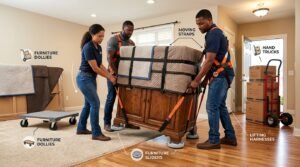
Never Move Heavy Furniture Alone
Many furniture-related accidents occur when individuals attempt to move large items by themselves. Even if an item seems manageable, unexpected shifts in weight can lead to injuries or dropped furniture.
Always ask for assistance when moving:
- Sofas
- Pianos
- Wardrobes
- Large appliances
- Office furniture
- Dining tables
Having additional people available improves stability and allows better control throughout the moving process.
Communication is equally important. Everyone involved should understand the planned route and lifting instructions before moving begins.
Protect Your Furniture
Heavy furniture is vulnerable to scratches, dents, and impact damage during transportation. Protective materials help safeguard valuable items throughout the move.
Common protective measures include:
- Wrapping furniture in moving blankets
- Using stretch wrap to secure doors and drawers
- Applying corner protectors
- Covering delicate surfaces
Wooden furniture, glass panels, and upholstered items particularly benefit from extra protection.
Investing a little time in preparation can prevent costly repairs later.
Be Extra Careful on Stairs
Moving furniture up or down stairs presents additional challenges. Weight distribution changes significantly on staircases, increasing the risk of slips and accidents.
When using stairs:
- Ensure the path is completely clear.
- Assign one person to guide from above and another from below.
- Move slowly and steadily.
- Communicate continuously.
- Take breaks when needed.
Never rush when carrying furniture on stairs. Maintaining control is far more important than moving quickly.
For exceptionally heavy items, professional movers may use specialised equipment designed specifically for stair transportation.
Protect Floors and Walls
Furniture can easily damage flooring and walls during a move. Scratches, dents, and scuff marks are common when precautions are not taken.
Protect your property by:
- Using furniture sliders
- Laying protective floor coverings
- Padding door frames
- Covering corners and walls
These simple measures help preserve the condition of both your old and new property during relocation.
Know When to Hire Professionals
Some furniture items require specialist handling due to their size, weight, or value. Attempting to move these items without professional assistance can be risky.
Professional furniture movers have:
- Experience handling heavy loads
- Specialist moving equipment
- Proper lifting techniques
- Insurance protection
- Trained moving teams
For large-scale house moves, office relocations, antique furniture, or particularly heavy items, hiring professional movers can provide peace of mind while reducing the risk of injury and damage.